
Signs Your San Antonio HVAC Unit is Leaking Inside the Walls
Your air conditioner works overtime in San Antonio’s brutal heat. When it runs constantly small problems can turn into big disasters inside your walls. A leaking HVAC drain line creates hidden water damage that destroys drywall promotes dangerous mold growth and costs thousands to repair. You need to spot these warning signs early before your home suffers serious structural damage. Water Damage Restoration Kirby.
San Antonio’s high humidity and limestone-rich water create perfect conditions for AC drain line problems. The constant moisture breeds algae and mineral buildup that clogs pipes and causes overflows. When your system leaks inside walls you might not see water immediately but the damage spreads fast through insulation and wood framing. What to do immediately when your Alamo Heights home starts flooding.
Watch for these five critical signs that your HVAC unit is leaking inside your walls. Early detection means faster repairs and less expensive restoration work.
1. Water Pooling Around Your Indoor HVAC Unit
The first sign appears near your furnace or air handler. You might notice water collecting on the floor around your indoor unit. This happens when the primary drain line clogs and the secondary pan overflows. The water should flow outside through a dedicated drain line not pool inside your home. Water Stains on Drywall.
Check the area carefully. You might see water stains on the concrete slab or damp spots on nearby walls. The moisture often spreads to wooden baseboards causing them to swell and warp. If you touch the wall near your HVAC unit and it feels cool and damp that’s a red flag.. Read more about Common Hidden Spots for Mold Growth in San Antonio Garden Homes.
San Antonio homes built on concrete slabs are especially vulnerable. Water pooling on the slab can seep into hairline cracks and spread under your flooring. Within 24-48 hours you might notice hardwood floors buckling or laminate flooring separating at the seams.. Read more about What San Antonio Homeowners Need to Know About Secondary Water Damage.
2. Musty Odors Coming from Your AC Closet or Utility Room
Water trapped inside walls creates a distinct musty smell that most homeowners recognize immediately. This odor comes from mold and mildew growing in dark damp spaces. Your AC closet or utility room might smell like a damp basement or wet newspaper.
The smell intensifies when your AC runs because the circulating air picks up moisture and distributes it throughout your home. You might notice the odor strongest when you first turn on your system after it’s been off for several hours.
San Antonio’s humid climate makes these smells more intense. The combination of warm temperatures and trapped moisture creates ideal conditions for Aspergillus and Penicillium mold species to thrive. These molds produce volatile organic compounds that create that characteristic musty odor.
If you notice this smell check your AC closet immediately. Look for water stains on walls damp insulation or visible mold growth on wooden framing. The problem often spreads beyond the immediate area as moisture travels through wall cavities.
3. Your AC System Shuts Off Unexpectedly
Modern HVAC systems include safety features that shut down the unit when they detect problems. A float switch in your secondary drain pan activates when water reaches a certain level. This safety mechanism prevents flooding but also signals a serious drain line issue.
When your AC shuts off unexpectedly especially on hot San Antonio afternoons check your thermostat. If the system won’t restart or cycles on and off rapidly you likely have a drain line blockage. The float switch trips to prevent water from overflowing and damaging your home.
This problem becomes more common during peak cooling season when your system runs constantly. The continuous operation means any small blockage grows worse quickly. What starts as a minor algae buildup can completely clog your drain line within days of heavy use.
Don’t ignore this warning sign. Continuing to run your system with a tripped float switch can cause the evaporator coil to freeze leading to even more water damage when it thaws. The ice buildup can also damage your compressor resulting in expensive repairs.
4. Water Stains Appearing on Walls or Ceilings
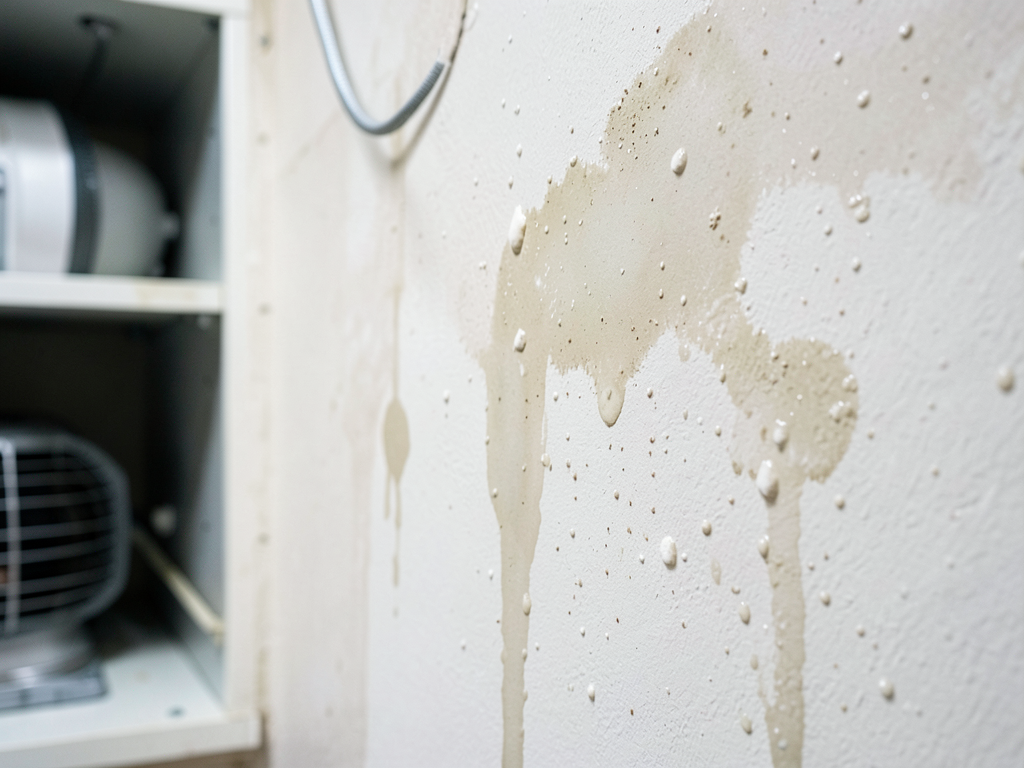
Water follows the path of least resistance through your walls. When your HVAC drain line leaks moisture travels along wooden studs and drywall. You might first notice discoloration on walls near your indoor unit or along ceiling lines where ductwork runs.
These stains often appear as yellowish-brown spots that grow larger over time. The edges might look darker than the center creating a ring pattern. As the moisture spreads the drywall becomes soft and may bubble or peel away from the surface.
San Antonio’s hard water leaves distinctive mineral deposits on surfaces. You might notice white or gray crusty buildup around water stains. These deposits form when mineral-rich water evaporates leaving behind calcium and magnesium residue.
Check your walls carefully with a flashlight. Small leaks can travel horizontally through wall cavities before showing visible signs. You might need to remove outlet covers or switch plates to inspect for moisture behind the wall surface.
5. Increased Humidity and Poor Indoor Air Quality
Your HVAC system should remove humidity from your home not add to it. When your drain line leaks the system can’t properly dehumidify the air. You might notice your home feels muggy even when the AC runs constantly.
High indoor humidity creates several problems beyond discomfort. Wood furniture swells paper products curl and electronic devices can malfunction. You might notice condensation on windows or mirrors even when outdoor humidity seems normal.. Read more about How to Tell if Your Great Northwest Home Has a Slab Leak or Just a Window Leak.
The poor air quality affects your health too. Mold spores released from growing colonies in your walls circulate through your HVAC system. Family members might experience increased allergy symptoms respiratory issues or unexplained headaches.
San Antonio’s naturally high outdoor humidity makes indoor humidity control crucial. A properly functioning AC should maintain indoor humidity between 30-50%. If your hygrometer reads consistently above 60% you likely have a system problem contributing to the issue.. Read more about The Hidden Connection Between San Antonio Humidity and Mold Growth Under Your Wallpaper.
Why AC Drain Lines Fail in San Antonio Homes
San Antonio’s unique climate creates perfect conditions for HVAC drain line problems. Our water contains high mineral content from limestone aquifers. When this water sits in your drain line it leaves behind scale deposits that narrow the pipe diameter.
The constant heat and humidity accelerate algae growth inside drain lines. These microorganisms multiply rapidly in dark moist environments. Within weeks a thin algae film can completely block water flow through your drain pipe.
Many San Antonio homes use flexible drain lines that sag over time. These low spots trap water and debris creating perfect conditions for blockages. The flexible material also deteriorates faster in our intense UV exposure and temperature swings.
According to the International Mechanical Code Section 307 condensate drain lines must maintain proper slope and be accessible for cleaning. Many local installations don’t meet these standards leading to premature failures. International Mechanical Code Section 307.
The Hidden Dangers of Ignoring HVAC Leaks
Small leaks become big problems quickly in San Antonio’s climate. Within 24-48 hours standing water in wall cavities creates perfect conditions for toxic black mold growth. Stachybotrys chartarum thrives in cellulose materials like drywall when moisture levels exceed 20%.
Water damage spreads beyond the immediate area. Moisture travels through wall studs and floor joists weakening structural components. What starts as a small leak can compromise your home’s structural integrity within months.
The cost of ignoring these problems multiplies rapidly. A simple drain line cleaning might cost $150-300 while structural repairs from prolonged leaks can exceed $10000. Insurance often denies claims for neglected maintenance issues.
Health risks increase with prolonged exposure to mold and damp conditions. Children elderly family members and those with respiratory conditions face the highest risks. Symptoms range from allergy-like reactions to serious lung infections.
Immediate Steps for San Antonio Homeowners
If you suspect your HVAC is leaking inside walls take these steps immediately. First turn off your AC system at the thermostat to prevent further water damage. Don’t wait for the system to shut down on its own.
Next check your secondary drain pan for standing water. If you find water you have a confirmed drain line blockage. Use towels to soak up visible water but understand that moisture likely extends into wall cavities.
Call a professional water damage restoration company rather than an HVAC technician. While HVAC techs fix the cause restoration specialists address the damage already done. They use moisture meters to detect hidden water in walls and employ industrial drying equipment. Expert tips for drying out hardwood floors in historic King William homes.
Document everything with photos before cleanup begins. This documentation helps with insurance claims and provides a baseline for restoration work. Note the date time and extent of visible damage.
San Antonio residents should also check their homeowner’s insurance policy. Many policies cover sudden water damage but exclude damage from neglected maintenance. Understanding your coverage helps you make informed decisions about repairs.
Professional Water Damage Restoration in San Antonio
Professional restoration goes beyond simple water extraction. Certified technicians use moisture meters to map the extent of damage often finding problems homeowners never suspected. They create drying plans based on psychrometric principles that ensure complete moisture removal. Professional Mold Removal and Remediation for Helotes Homeowners.
The restoration process typically includes water extraction antimicrobial treatment structural drying and moisture monitoring. Technicians use industrial air movers and dehumidifiers that remove moisture much faster than household fans.
San Antonio’s building codes require proper restoration to prevent future mold growth. The IICRC S500 standard guides professional restoration practices ensuring your home returns to pre-loss condition safely. IICRC S500 Standard.
Time matters significantly in water damage restoration. Mold can begin growing within 24-48 hours of water exposure. Professional intervention within the first 24 hours often prevents secondary damage and reduces restoration costs.
Don’t wait until small problems become major disasters. If you notice any signs of HVAC leaks call (210) 390-5977 today to schedule your inspection. Our certified technicians understand San Antonio’s unique climate challenges and provide comprehensive restoration solutions.
Pick up the phone and call (210) 390-5977 before the next storm hits. Quick action prevents costly repairs and protects your family’s health from mold exposure.
Frequently Asked Questions
How much does it cost to fix a leaking HVAC drain line?
Simple drain line cleaning typically costs $150-300. However if water has already damaged walls or flooring restoration costs increase significantly. Professional water damage restoration in San Antonio ranges from $1000-5000 depending on the extent of damage.
Can I clean my AC drain line myself?
You can try using a wet/dry vacuum on the drain line outside but this often provides only temporary relief. San Antonio’s hard water and humidity mean algae grows back quickly. Professional cleaning includes antimicrobial treatment that prevents rapid regrowth.
Will my homeowner’s insurance cover HVAC water damage?
Most policies cover sudden accidental water damage but exclude damage from neglected maintenance. If your drain line clogs due to lack of cleaning insurance might deny the claim. However if a component fails suddenly causing the leak coverage is more likely.
How long does water damage restoration take?
Initial water extraction and drying typically takes 3-5 days. However reconstruction of damaged walls or flooring can extend the timeline to 2-3 weeks. San Antonio’s humidity affects drying times sometimes requiring longer than standard procedures.
What are the signs of mold from a leaking HVAC?
Beyond visible mold growth signs include musty odors increased allergy symptoms respiratory issues and condensation on windows. San Antonio’s warm climate accelerates mold growth so problems often become apparent within days rather than weeks.
Should I turn off my AC if I suspect a leak?
Yes turn off your system immediately to prevent further damage. Running a system with a clogged drain line can cause the evaporator coil to freeze creating even more water when it thaws. This compounds the damage significantly.
{
“@context”: “https://schema.org”,
“@type”: “BlogPosting”,
“headline”: “Signs Your San Antonio HVAC Unit is Leaking Inside the Walls”,
“description”: “Discover critical warning signs of HVAC leaks inside San Antonio walls before costly damage occurs. Learn diagnostic sounds, smells, and textures that reveal hidden water damage.”,
“wordCount”: 1969,
“datePublished”: “2026-03-10T09:50:00.000Z”,
“dateModified”: “2026-03-10T09:50:00.000Z”,
“inLanguage”: “en-US”,
“mainEntityOfPage”: {
“@type”: “WebPage”,
“@id”: “https://titanwaterdamagerestorationsanantonio.com”
},
“publisher”: {
“@type”: “LocalBusiness”,
“name”: “Titan Water Damage Restoration San Antonio”,
“url”: “https://titanwaterdamagerestorationsanantonio.com”
},
“author”: {
“@type”: “Organization”,
“name”: “Titan Water Damage Restoration San Antonio”,
“url”: “https://titanwaterdamagerestorationsanantonio.com”
},
“image”: {
“@type”: “ImageObject”,
“url”: “https://titanwaterdamagerestorationsanantonio.com/wp-content/uploads/2026/03/signs-your-san-antonio-hvac-unit-is-leaking-inside-1.png”
}
}
{
“@context”: “https://schema.org”,
“@type”: “LocalBusiness”,
“name”: “Titan Water Damage Restoration San Antonio”,
“url”: “https://titanwaterdamagerestorationsanantonio.com”,
“address”: {
“@type”: “PostalAddress”,
“addressLocality”: “San Antonio”
},
“areaServed”: {
“@type”: “City”,
“name”: “San Antonio”
}
}
{
“@context”: “https://schema.org”,
“@type”: “FAQPage”,
“mainEntity”: [
{
“@type”: “Question”,
“name”: “How much does it cost to fix a leaking HVAC drain line?”,
“acceptedAnswer”: {
“@type”: “Answer”,
“text”: “Simple drain line cleaning typically costs $150-300. However if water has already damaged walls or flooring restoration costs increase significantly. Professional water damage restoration in San Antonio ranges from $1000-5000 depending on the extent of damage.”
}
},
{
“@type”: “Question”,
“name”: “Can I clean my AC drain line myself?”,
“acceptedAnswer”: {
“@type”: “Answer”,
“text”: “You can try using a wet/dry vacuum on the drain line outside but this often provides only temporary relief. San Antonio’s hard water and humidity mean algae grows back quickly. Professional cleaning includes antimicrobial treatment that prevents rapid regrowth.”
}
},
{
“@type”: “Question”,
“name”: “Will my homeowner’s insurance cover HVAC water damage?”,
“acceptedAnswer”: {
“@type”: “Answer”,
“text”: “Most policies cover sudden accidental water damage but exclude damage from neglected maintenance. If your drain line clogs due to lack of cleaning insurance might deny the claim. However if a component fails suddenly causing the leak coverage is more likely.”
}
},
{
“@type”: “Question”,
“name”: “How long does water damage restoration take?”,
“acceptedAnswer”: {
“@type”: “Answer”,
“text”: “Initial water extraction and drying typically takes 3-5 days. However reconstruction of damaged walls or flooring can extend the timeline to 2-3 weeks. San Antonio’s humidity affects drying times sometimes requiring longer than standard procedures.”
}
},
{
“@type”: “Question”,
“name”: “What are the signs of mold from a leaking HVAC?”,
“acceptedAnswer”: {
“@type”: “Answer”,
“text”: “Beyond visible mold growth signs include musty odors increased allergy symptoms respiratory issues and condensation on windows. San Antonio’s warm climate accelerates mold growth so problems often become apparent within days rather than weeks.”
}
},
{
“@type”: “Question”,
“name”: “Should I turn off my AC if I suspect a leak?”,
“acceptedAnswer”: {
“@type”: “Answer”,
“text”: “Yes turn off your system immediately to prevent further damage. Running a system with a clogged drain line can cause the evaporator coil to freeze creating even more water when it thaws. This compounds the damage significantly.”
}
}
]
}
{
“@context”: “https://schema.org”,
“@type”: “BreadcrumbList”,
“itemListElement”: [
{
“@type”: “ListItem”,
“position”: 1,
“name”: “Home”,
“item”: “https://titanwaterdamagerestorationsanantonio.com”
},
{
“@type”: “ListItem”,
“position”: 2,
“name”: “Blog”,
“item”: “https://titanwaterdamagerestorationsanantonio.com/blog”
},
{
“@type”: “ListItem”,
“position”: 3,
“name”: “Signs Your San Antonio HVAC Unit is Leaking Inside the Walls”
}
]
}
{
“@context”: “https://schema.org”,
“@type”: “Service”,
“serviceType”: “Water Damage Restoration”,
“provider”: {
“@type”: “LocalBusiness”,
“name”: “Titan Water Damage Restoration San Antonio”,
“url”: “https://titanwaterdamagerestorationsanantonio.com”
},
“areaServed”: {
“@type”: “City”,
“name”: “San Antonio”
},
“description”: “Discover critical warning signs of HVAC leaks inside San Antonio walls before costly damage occurs. Learn diagnostic sounds, smells, and textures that reveal hidden water damage.”
}