




Menu

Cupping or Buckling Wood Floors in San Antonio | Expert Diagnosis and Permanent Moisture Control Solutions

Liberty Water Damage Restoration Riverside identifies the hidden moisture sources causing your warped hardwood flooring and delivers engineered drying solutions that prevent recurrence, protecting your investment from San Antonio's humidity extremes.

Slider Image 1
Slider Image 2
Slider Image 3
Slider Image 4
Slider Image 5
Slider Image 7
Slider Image 8
Slider Image 9
Slider Image 10
Slider Image 11

Why San Antonio Hardwood Floors Warp, Cup, and Buckle

You walk across your floor and feel the ridges. The boards have lifted at the edges, creating peaks along the joints. Some planks have crowned in the middle, forming valleys between boards. Others have completely separated from the subfloor, creating hollow spots that flex underfoot.

This is cupping or buckling wood floors, and San Antonio's volatile humidity creates the perfect conditions for it.

The Texas Hill Country climate swings wildly. Summer humidity pushes 80 percent while the AC runs constantly indoors, creating massive moisture differentials. Winter cold snaps cause foundation movement in the expansive clay soils common throughout Bexar County. These soils swell when wet and contract when dry, shifting your slab and cracking the vapor barrier beneath your flooring.

When moisture penetrates hardwood from below or floods from above, the wood cells absorb water and expand. If the moisture hits the bottom of the plank first, the bottom expands while the top stays dry. The edges curl upward. That is cupping. If the entire plank absorbs moisture quickly and has nowhere to expand laterally because neighboring boards are also swollen, the planks lift vertically from the subfloor. That is buckling.

The swollen wood planks you see today started as a small leak weeks or months ago. A slow drip behind the dishwasher. A cracked slab allowing groundwater migration. A roof leak dripping into the wall cavity and spreading horizontally through the subfloor. The lifting floorboards and peaking hardwood joints are symptoms. The real problem is the moisture source, and it must be found and eliminated or your floors will continue to deform.

Why San Antonio Hardwood Floors Warp, Cup, and Buckle
How We Diagnose and Correct Warped Hardwood Flooring

How We Diagnose and Correct Warped Hardwood Flooring

Most contractors see raised wood floor edges and immediately quote you for replacement. That is premature and expensive. Hardwood can often be saved if you control moisture quickly and dry the wood properly.

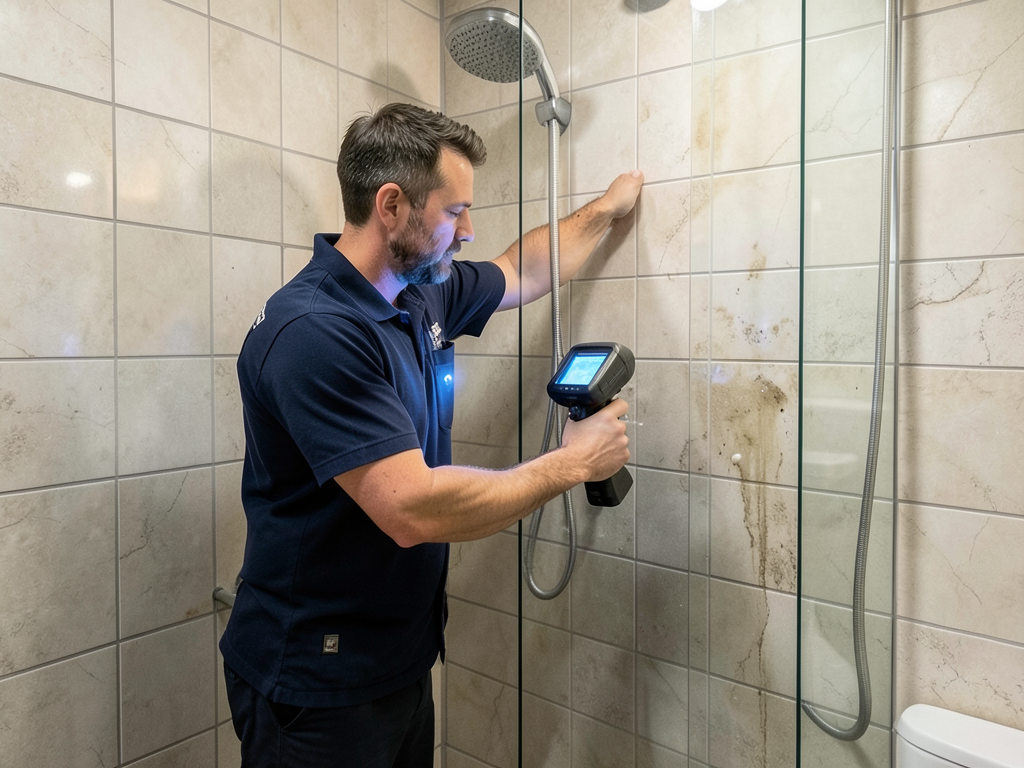
We use a methodical diagnostic approach. First, we map the affected area with penetrating moisture meters and thermal imaging cameras. We measure moisture content in the hardwood surface, at mid-depth, and in the subfloor beneath. This creates a moisture gradient map that reveals whether the water came from above, below, or laterally.

Next, we trace the source. We check the slab for cracks and hydrostatic pressure. We inspect HVAC condensate lines, supply lines under sinks, and toilet wax rings. We pull baseboards to examine wall cavities for hidden leaks. We test the subfloor for elevated alkalinity, which indicates concrete moisture migration.

Once the source is identified and repaired, we begin controlled drying. We do not simply run fans and hope. We use desiccant dehumidifiers calibrated to the wood species and thickness. We monitor the drying curve daily with moisture readings at multiple depths. If the wood dried too fast, the surface shrinks before the core releases its moisture, causing new internal stresses and cracking. If it dries too slowly, mold colonizes the damp wood.

For severe buckling where planks have lifted more than a quarter inch, we may need to remove sections, dry the subfloor separately, then reinstall or replace individual boards. For moderate cupping, we dry in place, then assess whether the planks will flatten naturally or require professional flattening and re-sanding once stabilized.

The key is patience and precision. Wood moves slowly. Drying must match that pace.

What Happens When You Call Us About Warped Floors

Cupping or Buckling Wood Floors in San Antonio | Expert Diagnosis and Permanent Moisture Control Solutions
01

Moisture Source Investigation

We arrive with thermal cameras and deep-probe moisture meters. We map your entire floor system to find the water entry point. We check appliances, plumbing penetrations, foundation cracks, and HVAC drain lines. Most cupping starts with a leak you never saw. We locate it, document it for insurance, and stop the water intrusion before any drying begins.
02

Controlled Extraction and Drying

We extract standing water with weighted extractors, then place low-grain refrigerant dehumidifiers and air movers in a calculated pattern. We measure moisture content twice daily and adjust airflow and temperature to achieve a drying rate that prevents surface checking. The subfloor and hardwood must dry in balance. We pull moisture logs and track the gradient until equilibrium is reached.
03

Stabilization and Floor Assessment

Once the wood reaches stable moisture content, we let it acclimate for several days. Minor cupping often self-corrects as the wood equalizes. For planks that remain cupped or buckled, we assess whether sanding, re-nailing, or selective board replacement is needed. We provide a clear scope and connect you with qualified flooring contractors if refinishing is required. You get a dry, stable floor ready for repair.

Why San Antonio Homeowners Trust Liberty Water Damage Restoration Riverside

Hardwood floor damage requires more than fast drying. It requires understanding how wood reacts to moisture over time and how San Antonio's environment accelerates that reaction.

We have restored warped hardwood in historic King William District homes where the original heart pine floors are irreplaceable. We have dried engineered hardwood in new construction along the far west side where builders installed flooring before the slab fully cured. We have corrected buckling in Medical Center area condos where second-floor water heater leaks saturated the ceiling of the unit below.

Every scenario is different, but the physics are the same. Moisture content must be measured, not guessed. Drying must be controlled, not rushed. The source must be fixed permanently, or the problem will return.

We work directly with your insurance adjuster. We provide detailed moisture logs, thermal images, and psychrometric data to support your claim. We know what documentation State Farm, USAA, and local carriers require. We provide it in the format they expect.

We also understand San Antonio building codes. If subfloor replacement is required, we know when a permit is needed and how to navigate the city inspection process. If mold is discovered during the investigation, we follow IICRC S520 remediation standards and provide third-party clearance testing.

You are not hiring a franchise call center. You are hiring a local team that knows the difference between a pier and beam foundation common in older neighborhoods and a post-tension slab common in new suburbs. That knowledge changes how we approach drying and how we protect your structure during the process.

What to Expect During the Floor Restoration Process

Response Time and Initial Assessment

We dispatch a technician within two hours of your call. The initial assessment takes 45 to 90 minutes depending on the size of the affected area. We map moisture, photograph damage, and identify the water source. You receive a written scope and moisture map the same day. If your floors are actively wet, we begin extraction immediately to prevent the damage from spreading. Speed matters because every hour of continued moisture exposure increases the likelihood of permanent deformation.

Moisture Monitoring and Drying Timeline

Hardwood drying takes longer than carpet or drywall. Expect three to seven days of active drying for moderate cupping and up to two weeks for severe buckling with subfloor saturation. We visit daily to record moisture levels at multiple points and adjust equipment. You will see the readings drop each day. We provide a daily log so you can track progress. We do not remove equipment until the wood reaches equilibrium moisture content for San Antonio's climate, which is typically 8 to 10 percent.

Final Floor Condition and Next Steps

Once drying is complete, we assess whether the hardwood has returned to a flat profile or requires professional intervention. Minor cupping often resolves on its own. Moderate cupping may need sanding and refinishing after a 30-day acclimation period. Severe buckling may require selective board replacement. We provide a written assessment of the floor condition and recommend qualified flooring contractors if needed. Our job is to return your floor to a dry, stable state ready for cosmetic repair.

Prevention and Long-Term Floor Protection

After restoration, we provide a written report detailing the original moisture source and any vulnerabilities we found. If the cupping was caused by a slab crack, we recommend foundation evaluation. If it was caused by a plumbing leak, we recommend annual supply line inspections. We also advise on humidity control. San Antonio homes should maintain indoor relative humidity between 30 and 50 percent to prevent seasonal wood movement. We can install remote moisture sensors that alert you to future leaks before they damage your floors again.

Frequently Asked Questions

You Have Questions,
We Have Answers

What is the difference between cupping and buckling floors? +

Cupping occurs when the edges of wood planks rise higher than the center, creating a concave shape. This happens when moisture penetrates from below, causing uneven expansion. Buckling is more severe. The entire plank lifts away from the subfloor, creating visible gaps or peaks. In San Antonio, our humid climate and flash flooding create conditions for both. Cupping usually stems from slow moisture intrusion like plumbing leaks or high humidity. Buckling results from sudden, heavy water exposure like burst pipes or storm flooding. Both require immediate moisture removal and professional assessment to prevent permanent damage.

Will cupped hardwood floors flatten out? +

Cupped floors may flatten if you catch the problem early. Once you remove the moisture source and dry the subfloor completely, wood can return to its original shape over several weeks. However, this only works if the wood fibers have not compressed permanently. In San Antonio's humidity, many homeowners wait too long, thinking the cupping will resolve on its own. Once the wood sets in a cupped position, sanding and refinishing become necessary. Professional moisture testing determines if natural flattening is possible or if you need repair work to restore your floors.

What does cupping look like on a wood floor? +

Cupped wood floors show edges that sit higher than the center of each plank. Run your hand across the boards and you will feel a washboard texture. The surface looks wavy or rippled, especially visible in side lighting. Individual planks form shallow U-shapes. In severe cases, the edges curl up noticeably. San Antonio homeowners often spot cupping first in kitchens, bathrooms, or rooms with exterior walls where moisture enters from below. The wood darkens in affected areas due to moisture absorption. Early detection shows subtle waviness, while advanced cupping creates dramatic ridges between boards.

What does a buckled hardwood floor look like? +

Buckled floors show dramatic lifting where entire sections pull away from the subfloor. You will see visible peaks or tent-like formations across multiple planks. The flooring creates gaps underneath, and you may hear hollow sounds when walking over affected areas. Unlike cupping, which affects individual boards gradually, buckling happens fast and involves larger sections. Planks may separate at joints or push against walls. In San Antonio homes after heavy rain or plumbing failures, buckling appears within hours of water exposure. The damage looks severe because it is. Buckled floors typically require replacement, not just drying.

Will buckled hardwood floors go back to normal? +

Buckled floors rarely return to normal on their own. The force required to lift planks from the subfloor causes permanent damage to the wood, underlayment, and fastening system. Even after removing moisture, the planks remain warped and the subfloor stays compromised. In San Antonio, attempting to wait out buckling invites mold growth in our humid climate. You must remove affected planks, dry and treat the subfloor, and install new flooring. Some peripheral boards near buckled sections may be salvageable after professional drying, but expect to replace most damaged areas completely.

Can cupped hardwood floors be repaired? +

Cupped floors can often be repaired if you address the moisture source quickly. First, professionals locate and fix the leak or humidity problem. Then, they dry the subfloor using commercial dehumidifiers and air movers. After moisture levels normalize over several weeks, many floors flatten naturally. If cupping persists, light sanding removes the raised edges without removing too much material. However, sanding only works if your floors have enough thickness remaining. San Antonio's concrete slab foundations sometimes trap moisture longer than wood subfloors, extending drying time. Professional moisture mapping prevents premature sanding that damages your floors permanently.

How much does it cost to repair cupping wood floors? +

Repair costs vary based on damage severity and square footage affected. Minor cupping requiring only drying and monitoring ranges from $800 to $2,000 for professional moisture removal. Moderate cupping needing sanding and refinishing costs $3 to $8 per square foot. Severe cases requiring plank replacement run $8 to $15 per square foot, including materials and labor. San Antonio factors include accessibility, wood species availability, and whether your slab foundation needs moisture barrier installation. Insurance often covers water damage repairs if the cause was sudden and accidental. Get multiple quotes and ensure contractors provide moisture readings before and after work.

What would cause hardwood floors to cup? +

Hardwood floors cup when moisture penetrates from below faster than it evaporates from above. Common San Antonio causes include slab moisture from inadequate vapor barriers, plumbing leaks in crawl spaces or under slabs, high humidity during summer months, and flooding from heavy rains. Our clay soil expands when wet, sometimes pushing moisture through concrete foundations. Improperly installed flooring without acclimation time cups quickly. HVAC failures that allow humidity above 60 percent create conditions for cupping. Even minor leaks from water heaters, refrigerators, or washing machines cause cumulative damage if left undetected for months.

Will a dehumidifier pull water from under the floor? +

A standard dehumidifier cannot pull water trapped between your floor and subfloor. It only removes airborne moisture from the room. For water under flooring, professionals use specialized drying equipment including injecti-dry systems that force air beneath floors, or they remove sections to allow direct drying. San Antonio's concrete slab foundations complicate this because moisture gets trapped between the slab and wood. Sometimes professionals drill small holes to facilitate airflow and drying. Surface-level dehumidifiers help prevent additional moisture problems but do not address existing water below your floors. Professional extraction equipment is necessary for effective results.

How to reverse wood floor cupping? +

Reversing wood floor cupping requires eliminating the moisture source first. Stop all leaks, fix drainage problems, and control indoor humidity below 50 percent. Use commercial dehumidifiers and air movers to dry the subfloor thoroughly. This takes three to six weeks depending on moisture levels. Monitor the floors weekly with a moisture meter. Once readings stabilize at normal levels, evaluate if the wood has flattened naturally. If cupping remains after complete drying, light sanding removes raised edges. San Antonio humidity requires you to maintain consistent climate control after repairs to prevent recurrence. Never sand cupped floors before complete drying.

How San Antonio's Expansive Clay Soil Causes Hidden Subfloor Moisture Migration

San Antonio sits on expansive clay soils that shift dramatically with moisture changes. During heavy rain, the clay swells and pushes upward against your foundation. During drought, it contracts and pulls away, creating voids. This movement cracks concrete slabs and separates vapor barriers, allowing groundwater to migrate through the slab and into your subfloor. You never see the water, but your hardwood absorbs it from below, causing cupping that starts at the center of rooms far from any plumbing. This is a known issue in neighborhoods throughout Bexar County, and it requires soil moisture testing and slab inspection to diagnose correctly.

Liberty Water Damage Restoration Riverside understands how San Antonio foundations behave. We do not assume every warped floor is a plumbing leak. We test for hydrostatic pressure, measure subfloor alkalinity, and inspect expansion joints before we begin drying. This level of investigation is critical in a city where soil movement is constant and foundation repairs are common. Choosing a water damage company that knows local soil conditions means you get accurate diagnosis and a solution that addresses the real cause, not just the surface symptom.

Water Damage Services in The San Antonio Area

We are proud to serve the entire San Antonio area. Our team is strategically located to ensure a rapid response to your location, no matter where you are. View our service area on the map to see if we cover your neighborhood, and please don't hesitate to reach out for immediate assistance. We're always here to help you navigate a water damage crisis with confidence and ease.

Address:
Titan Water Damage Restoration San Antonio, 5154 Broadway, San Antonio, TX, 78209

Additional Services We Offer

Our news updates

Latest Articles & News from The Blogs

What Exactly Happens Inside Your Walls During the First 24 Hours of a Leak \n\n Water damage inside your walls…

What Exactly Happens Inside Your Walls During the First 24 Hours of a Leak

What Exactly Happens Inside Your Walls During the First 24 Hours of a Leak \n\n Water damage inside your walls…

Why Waterproof Vinyl Plank Flooring Can Still Trap Moisture and Grow Mold

Why Waterproof Vinyl Plank Flooring Can Still Trap Moisture and Grow Mold Waterproof vinyl plank flooring seems like the perfect…

Simple Ways to Seal Your Windows Before the San Antonio Rainy Season Starts

Simple Ways to Seal Your Windows Before the San Antonio Rainy Season Starts San Antonio’s rainy season brings intense thunderstorms…

Contact Us

Warped hardwood gets worse the longer moisture remains. Call Liberty Water Damage Restoration Riverside at (210) 390-5977 for same-day moisture assessment and a clear plan to save your floors. We provide detailed documentation for insurance and start drying immediately.