
The Trouble With Water Seeping into Split Level Homes Near the Helotes Hillsides
Split level homes in Helotes face a unique water drainage challenge that many homeowners don’t discover until it’s too late. The tiered foundation design that makes these homes so appealing also creates vulnerable pressure points where water can seep in during San Antonio’s heavy rain seasons. Understanding the specific risks and solutions for your split level home can prevent costly water damage and protect your investment. Water Damage Restoration Kirby.
The trouble begins with the mid-level transition zone where the sunken living area meets the main level foundation. This junction creates a perfect storm for water intrusion when combined with Helotes’ expansive clay soil and the area’s sloping terrain. Without proper drainage systems, hydrostatic pressure builds against foundation walls, forcing water through even the smallest cracks.
Understanding Split Level Architecture in Helotes
Split level homes gained popularity in Helotes during the 1970s and 1980s when the area experienced rapid suburban development. These homes typically feature three distinct levels: a main level with kitchen and living areas, a sunken family room or den below, and bedrooms above. The design maximizes hillside lots but creates complex drainage challenges.
The lower level in Helotes split homes often sits partially below grade due to the natural slope of the Texas Hill Country. This below-grade positioning means the foundation walls on the downhill side are subjected to constant pressure from surrounding soil and groundwater. During San Antonio’s rainy season, this pressure intensifies dramatically.
Helotes’ location within the Edwards Plateau means homes sit on a mix of limestone bedrock and clay-rich soil. The clay component is particularly problematic because it expands when wet and contracts when dry. This constant movement creates stress on foundation joints and can open new pathways for water intrusion over time.

The Science Behind Water Seepage in Split Level Homes
Water seepage in split level homes follows predictable physical principles that become amplified in Helotes’ specific conditions. When rain falls on sloped terrain, gravity pulls water downward toward the lowest points. In a split level home, that often means the mid-level transition zone becomes a collection point for surface water. EPA Mold Guidelines.
Hydrostatic pressure builds when water accumulates in soil surrounding foundation walls. For every foot of water depth, pressure increases by approximately 0.43 pounds per square inch. During a heavy San Antonio thunderstorm, this pressure can easily exceed 10 PSI against foundation walls, forcing water through hairline cracks.. Read more about Checking for Subfloor Rot Under Your New Westover Hills Luxury Vinyl Planks.
The clay soil common in Helotes exacerbates this problem. Texas Blackland Prairie clay can absorb up to 40% of its weight in water. As it expands, it creates additional lateral pressure against foundation walls while simultaneously blocking natural drainage pathways that might otherwise relieve pressure.
Temperature fluctuations in Helotes also play a role. The area experiences significant day-to-night temperature swings, especially during spring and fall. These temperature changes cause foundation materials to expand and contract, creating tiny gaps that water can exploit during the next rainfall.
Common Signs of Water Seepage in Split Level Homes
Recognizing the early warning signs of water seepage can save Helotes homeowners thousands in repair costs. The first indication often appears as efflorescence on foundation walls. This white, powdery substance forms when water carrying dissolved minerals evaporates, leaving mineral deposits behind.
Damp spots on lower level walls or carpeting signal active water intrusion. In split level homes, these spots often appear near the junction where the sunken level meets the main level foundation. The moisture may come and go with rainfall, making it easy to dismiss as a minor issue.
Musty odors in lower level rooms indicate moisture problems that have progressed beyond simple seepage. Mold and mildew thrive in the humid conditions created by chronic water intrusion. The distinctive earthy smell becomes noticeable when humidity levels consistently exceed 60%.
Cracks in foundation walls wider than 1/8 inch often indicate structural stress from hydrostatic pressure. Stair-step cracks in mortar joints or horizontal cracks along foundation walls suggest water pressure is pushing against the structure. These cracks typically worsen during rainy seasons and may close partially during dry periods.
Water pooling near foundation walls after rainfall points to surface drainage problems. In Helotes, this often occurs when landscaping slopes toward the house rather than away from it. Even a slight negative grade can direct thousands of gallons of water toward your foundation during a typical Texas thunderstorm.
San Antonio’s Climate Impact on Split Level Drainage
Helotes sits within Bexar County’s unique microclimate zone, experiencing weather patterns that directly impact split level home drainage. The area receives approximately 30 inches of rainfall annually, concentrated in spring and fall. This precipitation pattern means split level homes face seasonal stress cycles that can weaken drainage systems over time.
Flash flooding represents a particular threat to split level homes in Helotes. The Texas Hill Country’s rocky terrain and clay soils create conditions where heavy rainfall can’t be absorbed quickly enough. Water sheets across the surface, gaining momentum as it flows downhill toward homes built on slopes.
Summer heat in Helotes creates additional challenges. Temperatures regularly exceed 95°F, causing soil to dry and shrink away from foundation walls. When the first heavy rain arrives, water rushes into these gaps, creating a sudden surge of pressure against foundation materials that have already been stressed by heat.
Winter brings freeze-thaw cycles that can damage drainage systems. While Helotes doesn’t experience prolonged freezing temperatures, occasional cold snaps can cause water in soil to freeze and expand. This expansion creates pressure against foundation walls and can crack drainage pipes or damage waterproofing membranes.
Humidity levels in Helotes average 70-80% throughout the year, creating ideal conditions for mold growth when water intrusion occurs. This persistent moisture in the air means that even small amounts of water seepage can lead to significant mold problems if not addressed promptly.
Building Code Requirements for Split Level Drainage
Bexar County and the City of San Antonio enforce specific building code requirements that impact split level home drainage. The International Residential Code (IRC) Section R405 mandates that foundations in areas with problematic soils must include drainage systems to prevent hydrostatic pressure buildup.
Local amendments to the IRC require that all new construction in Helotes include perimeter drains with a minimum slope of 1% to ensure proper water flow. These drains must discharge at least 5 feet away from foundation walls, though many engineers recommend 10-15 feet for split level homes on sloped lots.
The San Antonio Water System (SAWS) drainage guidelines specify that properties must manage stormwater runoff to prevent it from affecting neighboring properties. For split level homes, this often means installing retention systems or directing water to approved drainage channels rather than allowing it to sheet across property lines.. Read more about Does Your Longs Creek Property Need a French Drain to Prevent Recurring Yard Floods?.
Foundation waterproofing requirements in Helotes exceed those in flatter areas of San Antonio. The local building code mandates that foundation walls extending more than 24 inches below grade must include waterproofing membranes. For split level homes, this typically means waterproofing the lower level exterior walls.
Permit requirements for drainage modifications in Helotes are strict. Any work that alters how water flows across a property requires approval from the Bexar County Engineer’s Office. This includes installing French drains, modifying swales, or adding catch basins to manage water around split level foundations.
Proven Solutions for Split Level Water Seepage
Addressing water seepage in split level homes requires a comprehensive approach that tackles both symptoms and underlying causes. The most effective solutions combine exterior drainage improvements with interior moisture management systems to create multiple layers of protection.
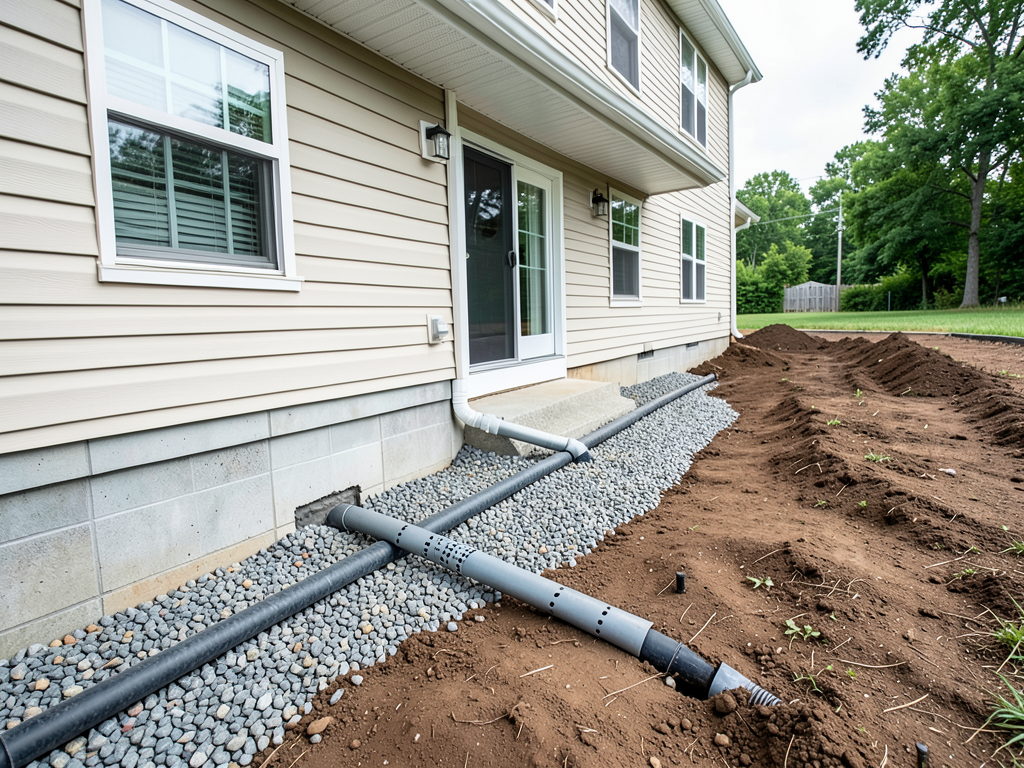
French drain installation represents the most common solution for split level homes in Helotes. These systems consist of perforated pipes surrounded by gravel, installed in trenches along foundation walls. The pipes collect water and direct it away from the home, reducing hydrostatic pressure on foundation walls.
Proper grading around split level homes can dramatically reduce water seepage problems. The ground should slope away from foundation walls at a rate of 6 inches of drop for the first 10 feet. In Helotes, where natural slopes often work against this ideal, creating artificial swales or berms may be necessary.
Catch basins and channel drains provide additional protection for split level homes with significant surface water issues. These systems collect water before it reaches foundation walls and direct it to appropriate discharge points. In Helotes, catch basins are particularly effective at managing water from driveway runoff and roof downspouts.
Sump pump systems offer protection for the lowest level of split level homes. While traditional basements are rare in Helotes, the sunken living areas in split level homes can benefit from sump pumps that activate when water accumulates in collection pits. Modern sump pumps include battery backups to ensure operation during power outages.
Foundation waterproofing membranes provide a critical barrier against water intrusion. These membranes, applied to exterior foundation walls, prevent water from penetrating concrete even under significant hydrostatic pressure. In Helotes, where clay soil creates constant moisture challenges, waterproofing represents an essential investment.
Professional Water Damage Restoration Process
When water seepage leads to damage in split level homes, professional restoration follows a systematic process to ensure complete recovery. The first step involves identifying all affected areas using moisture detection equipment. Professional restoration teams use thermal imaging cameras and moisture meters to locate hidden water pockets behind walls and under flooring. Professional Mold Removal and Remediation for Helotes Homeowners.
Water extraction begins immediately using commercial-grade equipment. Truck-mounted extraction units can remove thousands of gallons of water per hour, significantly reducing drying time. For split level homes, special attention focuses on the lower level where water tends to accumulate and cause the most damage. Expert tips for drying out hardwood floors in historic King William homes.
Structural drying requires strategic placement of air movers and dehumidifiers. The unique architecture of split level homes means creating multiple drying zones to address different levels simultaneously. Air movers should direct airflow along walls where water typically travels, while dehumidifiers remove moisture from the air to prevent secondary damage.
Content manipulation protects personal belongings during the restoration process. In split level homes, this often means moving furniture and valuables from the lower level to unaffected areas. Professional restoration teams use specialized techniques to dry valuable items in place when relocation isn’t possible.
Mold prevention becomes critical in Helotes’ humid climate. The restoration process includes applying antimicrobial treatments to affected areas and monitoring humidity levels throughout the drying process. Split level homes require particular attention to the junction areas where different levels meet, as these spots often harbor hidden moisture.
Final inspection ensures all moisture has been eliminated before reconstruction begins. Professional restoration teams use moisture meters to verify that materials have returned to acceptable moisture content levels. For split level homes, this means checking multiple levels and transition zones to confirm complete drying.
Emergency Response for Split Level Water Damage
Water damage in split level homes requires immediate action to prevent escalation. The first 24-48 hours represent the critical window for minimizing damage and preventing mold growth. Professional emergency response teams in Helotes understand the unique challenges of split level architecture and arrive equipped to address them. Emergency Roof Tarping and Water Mitigation Services in Shavano Park.
Safety assessment precedes all emergency work. Split level homes often have electrical systems running through lower level walls, creating shock hazards when water is present. Professional teams shut off power to affected areas and use ground-fault circuit interrupters on all equipment to ensure worker and occupant safety.
Water source identification helps prevent ongoing damage. In split level homes, water may enter from multiple points depending on the source and home configuration. Professional teams trace water pathways to identify all entry points, ensuring that mitigation efforts address the complete problem rather than just visible symptoms.
Contents protection involves moving valuable items to dry areas and elevating furniture on blocks to prevent staining and damage. In split level homes, this often means creating staging areas on upper levels while the lower level undergoes water extraction and drying.
Insurance documentation provides crucial support for claims processing. Professional restoration teams document damage with photos, moisture readings, and detailed reports that insurance companies require. For split level homes, this documentation must show damage across multiple levels and demonstrate the extent of water migration.
Demolition decisions depend on the category of water involved. Clean water from supply lines requires different handling than contaminated water from sewage backups or flooding. Split level homes may have different contamination levels on different levels, requiring varied approaches to material removal and cleaning. Fixing a Sewage Backup in Your Stone Oak Home without the Stress.
Preventive Maintenance for Split Level Homes
Regular maintenance can prevent most water seepage problems in split level homes. Annual inspections of drainage systems, foundation walls, and landscaping should occur before the rainy season begins. In Helotes, scheduling these inspections for late winter ensures systems are ready for spring thunderstorms.
Gutter and downspout maintenance prevents thousands of gallons of water from overwhelming foundation drainage systems. Gutters should be cleaned at least twice yearly, with additional cleaning after heavy storms. Downspout extensions should direct water at least 5 feet from foundation walls, with 10 feet being ideal for split level homes.
Sump pump testing ensures reliable operation when needed most. Testing should occur quarterly by pouring water into the sump pit and verifying that the pump activates and discharges water properly. Backup power systems should be tested monthly to ensure operation during power outages that often accompany severe storms.
Foundation crack monitoring helps identify developing problems before they become serious. Small cracks can be monitored using epoxy injection to seal them and prevent water entry. Larger cracks may indicate structural issues requiring professional evaluation, especially in split level homes where differential settling can create stress points.
Landscaping maintenance prevents water from flowing toward foundation walls. Plants and mulch should be kept at least 12 inches from foundation walls to prevent moisture retention against concrete. Trees should be planted far enough from the home that roots won’t damage foundation walls or drainage systems.
Roof inspection and maintenance prevent water from entering through upper levels and migrating downward. Split level homes often have multiple roof planes that create valleys where water concentrates. These areas require special attention to ensure proper flashing and drainage to prevent leaks that affect lower levels.
When to Call a Professional
Certain water seepage situations in split level homes require immediate professional attention. If you notice water entering your home during rainfall, especially if it’s a new occurrence, professional evaluation can identify the source and prevent further damage. The longer water intrusion continues, the more expensive repairs become.
Mold growth visible on walls or ceilings indicates moisture problems that require professional remediation. In Helotes’ humid climate, mold can spread rapidly once established. Professional remediation teams have the equipment and expertise to remove mold safely while addressing the underlying moisture issues that caused it.
Foundation cracks wider than 1/4 inch or showing signs of movement warrant professional structural evaluation. These cracks may indicate serious foundation problems that could compromise your home’s safety. Split level homes are particularly susceptible to differential settling that creates stress on foundation walls.
Persistent musty odors in lower level rooms suggest chronic moisture problems that DIY solutions can’t address. Professional moisture detection equipment can locate hidden water sources and determine the extent of damage. In Helotes, where humidity complicates moisture issues, professional assessment often reveals problems homeowners miss.
Water bills that increase without explanation may indicate hidden leaks in foundation plumbing. Split level homes often have plumbing running through concrete slabs, making leaks difficult to detect without professional equipment. Early detection prevents extensive damage and reduces water waste.
Insurance companies often require professional assessment for water damage claims. DIY repairs may not meet insurance requirements, potentially leaving you responsible for costs. Professional restoration teams provide the documentation and expertise that insurance companies expect for claim approval.
Cost Factors for Split Level Drainage Solutions
The cost of addressing water seepage in split level homes varies significantly based on the extent of the problem and chosen solutions. Simple exterior grading improvements might cost $500-1,500, while comprehensive French drain systems with sump pumps can exceed $10,000 for larger homes.
Exterior drainage improvements typically cost $20-30 per linear foot for French drains. A typical split level home might require 100-200 feet of drainage around the lower level, resulting in costs of $2,000-6,000. Additional features like catch basins or channel drains increase costs but may be necessary for severe problems.
Foundation waterproofing adds $5-10 per square foot to exterior work. For a typical split level home with 500-800 square feet of lower level exterior wall, waterproofing costs range from $2,500-8,000. This investment often proves worthwhile by preventing future water damage that could cost much more to repair.
Interior drainage systems cost $30-50 per linear foot and require breaking concrete to install. These systems collect water that penetrates foundation walls and direct it to sump pumps. While more expensive than exterior solutions, they may be necessary when exterior access is limited or when dealing with severe hydrostatic pressure.
Sump pump systems range from $1,500-3,000 for basic installations to $5,000+ for systems with battery backups and high-capacity pumps. The investment in quality equipment pays off in reliability and reduced maintenance costs over time, especially important in Helotes where power outages often accompany storms.
Professional restoration costs vary based on damage extent and required services. Water extraction and drying typically cost $3-5 per square foot of affected area. Mold remediation adds $15-30 per square foot, while structural repairs can range from $50-200 per square foot depending on the work required.
Frequently Asked Questions
How can I tell if my split level home has water seepage problems?
Look for efflorescence on foundation walls, damp spots on lower level walls or carpeting, musty odors in lower rooms, foundation cracks wider than 1/8 inch, and water pooling near foundation walls after rainfall. These signs indicate active water intrusion that requires attention.
Are sump pumps necessary for split level homes in Helotes?
Sump pumps aren’t always necessary but are highly recommended for split level homes with lower levels below grade or on sloped lots. They provide crucial protection during heavy rains when hydrostatic pressure is highest. Homes with a history of water problems definitely benefit from sump pump installation.
How much does it cost to fix water seepage in a split level home?
Costs range from $500 for simple grading improvements to over $10,000 for comprehensive drainage systems with waterproofing. Most homeowners spend $3,000-7,000 on effective solutions. The exact cost depends on the extent of the problem, home size, and chosen solutions.
Can I fix water seepage problems myself?
Minor issues like cleaning gutters and improving surface grading can be DIY projects. However, foundation waterproofing, French drain installation, and structural repairs require professional expertise. Improper DIY repairs often make problems worse and may void insurance coverage.
How long does it take to install drainage solutions for a split level home?
Simple exterior grading takes 1-2 days. French drain installation typically requires 3-5 days. Complete waterproofing and drainage systems may take 1-2 weeks depending on weather and project complexity. Professional teams work efficiently to minimize disruption while ensuring quality installation.
Conclusion
Water seepage in split level homes near Helotes represents a serious but manageable challenge. The unique architecture that makes these homes so appealing also creates vulnerabilities that require specific solutions. Understanding the science behind water intrusion, recognizing early warning signs, and implementing appropriate drainage systems can protect your home from costly damage.
The key to success lies in addressing both symptoms and underlying causes. Exterior drainage improvements prevent water from reaching foundation walls, while interior systems manage any water that does penetrate. Regular maintenance ensures these systems continue functioning properly, especially important in Helotes where seasonal weather patterns create recurring challenges.
Professional assessment provides the foundation for effective solutions. Every split level home has unique characteristics based on its specific lot, construction, and surrounding conditions. Professional evaluation identifies the most cost-effective approach for your situation, preventing wasted money on solutions that don’t address your actual problems.
Don’t wait for water damage to become obvious before taking action. The cost of preventive measures always proves less expensive than emergency repairs. If you’re experiencing any signs of water seepage in your split level home, call (210) 390-5977 today to schedule your inspection. Our experienced team understands the unique challenges Helotes homeowners face and can recommend solutions that protect your investment for years to come.
Pick up the phone and call (210) 390-5977 before the next storm hits. Water damage only gets worse with time, and our 24/7 emergency response team is ready to help you protect your split level home from the unique drainage challenges of the Helotes hillsides. For more information, visit FEMA Flood Protection.
{
“@context”: “https://schema.org”,
“@type”: “BlogPosting”,
“headline”: “The Trouble With Water Seeping into Split Level Homes Near the Helotes Hillsides”,
“description”: “Discover why split level homes in Helotes face unique drainage challenges. Learn about hydrostatic pressure, clay soil issues, and professional solutions for water seepage.”,
“wordCount”: 3469,
“datePublished”: “2026-04-29T15:11:00.000Z”,
“dateModified”: “2026-04-29T15:11:00.000Z”,
“inLanguage”: “en-US”,
“mainEntityOfPage”: {
“@type”: “WebPage”,
“@id”: “https://titanwaterdamagerestorationsanantonio.com”
},
“publisher”: {
“@type”: “LocalBusiness”,
“name”: “Titan Water Damage Restoration San Antonio”,
“url”: “https://titanwaterdamagerestorationsanantonio.com”
},
“author”: {
“@type”: “Organization”,
“name”: “Titan Water Damage Restoration San Antonio”,
“url”: “https://titanwaterdamagerestorationsanantonio.com”
},
“image”: {
“@type”: “ImageObject”,
“url”: “https://titanwaterdamagerestorationsanantonio.com/wp-content/uploads/2026/03/the-trouble-with-water-seeping-into-split-level-ho-1.png”
}
}
{
“@context”: “https://schema.org”,
“@type”: “LocalBusiness”,
“name”: “Titan Water Damage Restoration San Antonio”,
“url”: “https://titanwaterdamagerestorationsanantonio.com”,
“address”: {
“@type”: “PostalAddress”,
“addressLocality”: “San Antonio”
},
“areaServed”: {
“@type”: “City”,
“name”: “San Antonio”
}
}
{
“@context”: “https://schema.org”,
“@type”: “FAQPage”,
“mainEntity”: [
{
“@type”: “Question”,
“name”: “How can I tell if my split level home has water seepage problems?”,
“acceptedAnswer”: {
“@type”: “Answer”,
“text”: “Look for efflorescence on foundation walls, damp spots on lower level walls or carpeting, musty odors in lower rooms, foundation cracks wider than 1/8 inch, and water pooling near foundation walls after rainfall. These signs indicate active water intrusion that requires attention.”
}
},
{
“@type”: “Question”,
“name”: “Are sump pumps necessary for split level homes in Helotes?”,
“acceptedAnswer”: {
“@type”: “Answer”,
“text”: “Sump pumps aren’t always necessary but are highly recommended for split level homes with lower levels below grade or on sloped lots. They provide crucial protection during heavy rains when hydrostatic pressure is highest. Homes with a history of water problems definitely benefit from sump pump installation.”
}
},
{
“@type”: “Question”,
“name”: “How much does it cost to fix water seepage in a split level home?”,
“acceptedAnswer”: {
“@type”: “Answer”,
“text”: “Costs range from $500 for simple grading improvements to over $10,000 for comprehensive drainage systems with waterproofing. Most homeowners spend $3,000-7,000 on effective solutions. The exact cost depends on the extent of the problem, home size, and chosen solutions.”
}
},
{
“@type”: “Question”,
“name”: “Can I fix water seepage problems myself?”,
“acceptedAnswer”: {
“@type”: “Answer”,
“text”: “Minor issues like cleaning gutters and improving surface grading can be DIY projects. However, foundation waterproofing, French drain installation, and structural repairs require professional expertise. Improper DIY repairs often make problems worse and may void insurance coverage.”
}
},
{
“@type”: “Question”,
“name”: “How long does it take to install drainage solutions for a split level home?”,
“acceptedAnswer”: {
“@type”: “Answer”,
“text”: “Simple exterior grading takes 1-2 days. French drain installation typically requires 3-5 days. Complete waterproofing and drainage systems may take 1-2 weeks depending on weather and project complexity. Professional teams work efficiently to minimize disruption while ensuring quality installation.”
}
}
]
}
{
“@context”: “https://schema.org”,
“@type”: “BreadcrumbList”,
“itemListElement”: [
{
“@type”: “ListItem”,
“position”: 1,
“name”: “Home”,
“item”: “https://titanwaterdamagerestorationsanantonio.com”
},
{
“@type”: “ListItem”,
“position”: 2,
“name”: “Blog”,
“item”: “https://titanwaterdamagerestorationsanantonio.com/blog”
},
{
“@type”: “ListItem”,
“position”: 3,
“name”: “The Trouble With Water Seeping into Split Level Homes Near the Helotes Hillsides”
}
]
}
{
“@context”: “https://schema.org”,
“@type”: “Service”,
“serviceType”: “Water Damage Restoration”,
“provider”: {
“@type”: “LocalBusiness”,
“name”: “Titan Water Damage Restoration San Antonio”,
“url”: “https://titanwaterdamagerestorationsanantonio.com”
},
“areaServed”: {
“@type”: “City”,
“name”: “San Antonio”
},
“description”: “Discover why split level homes in Helotes face unique drainage challenges. Learn about hydrostatic pressure, clay soil issues, and professional solutions for water seepage.”
}